
Honed Concrete vs Polished Concrete: Which Should You Pick?
October 24, 2026 · 9 min read
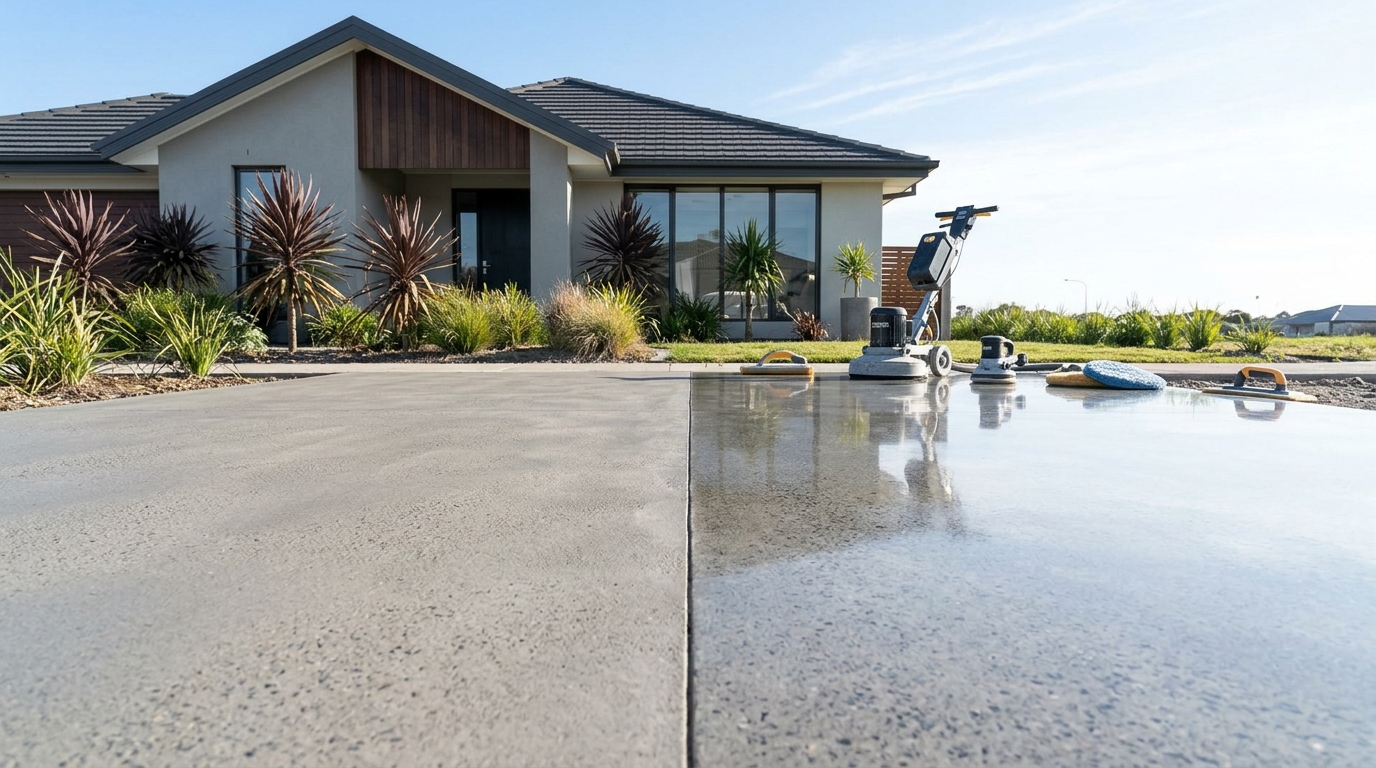
Honed concrete is ground to a flat, matte surface and stops before any shine appears. Polished concrete keeps going through finer diamond grits until it reflects light like glass. If you want grip and a soft, natural look, honed is usually the better pick, and it suits outdoor use. If you want a glossy indoor floor, polished is the one to choose.
Honed Concrete in Perth: Finishes, Costs, and Applications
If you searched for honed concrete Perth, WA, the finish works the same way anywhere in Australia. We are a Melbourne, VIC team, so we quote and build locally here, but the guidance below applies to any Australian home. Perth's climate brings strong UV and long dry summers, while Melbourne swings between hot days and wet winters. In both cities, the sealer you choose matters as much as the grind.
Honed Concrete Perth: Quick Answers
Finish: flat and matte, with the stone showing at the level you choose.
Where it works: indoors and outdoors, from patios and paths to shop floors.
Grip: good when sealed properly, because there is no gloss layer.
Upkeep: light cleaning, plus a reseal every so often.
Honed Concrete Cost in Perth
Honed concrete cost is usually quoted per square metre, and the number depends on the job. We will not guess a price here, because the same slab can cost very different amounts depending on its condition. The main factors are:
Whether you are pouring a new slab or working on an existing slab.
How deep the grind goes, from light to full aggregate exposure.
The type of sealer and any anti slip treatment.
Site access, total area and the amount of repair needed first.
The best way to get a firm number is to have someone look at the slab. We are happy to do that for Melbourne, VIC properties.
What Is Honed Concrete?
Honed concrete is created by mechanically grinding cured concrete with diamond tooling. The grinding removes the thin top layer of cement paste and leaves a flat, matte surface with exposed aggregates. You see the sand and stone inside the mix rather than a smooth skin of cement.
The grinding process for honed concrete stops before achieving a high-gloss finish. That is the key to the look. You get a soft, even surface that feels refined without reflecting every light in the room.
Honed concrete makes a modern finish that suits many architectural styles. It sits well beside timber, glass, steel and brick. It is suitable for both indoor and outdoor applications, and a matte finish is a sensible choice for any outdoor surface.
How Concrete Honing Creates the Finished Surface
Concrete honing is a multi step process. Each pass uses a finer diamond tool than the last, and the order matters. Skipping a step leaves scratches that show later.
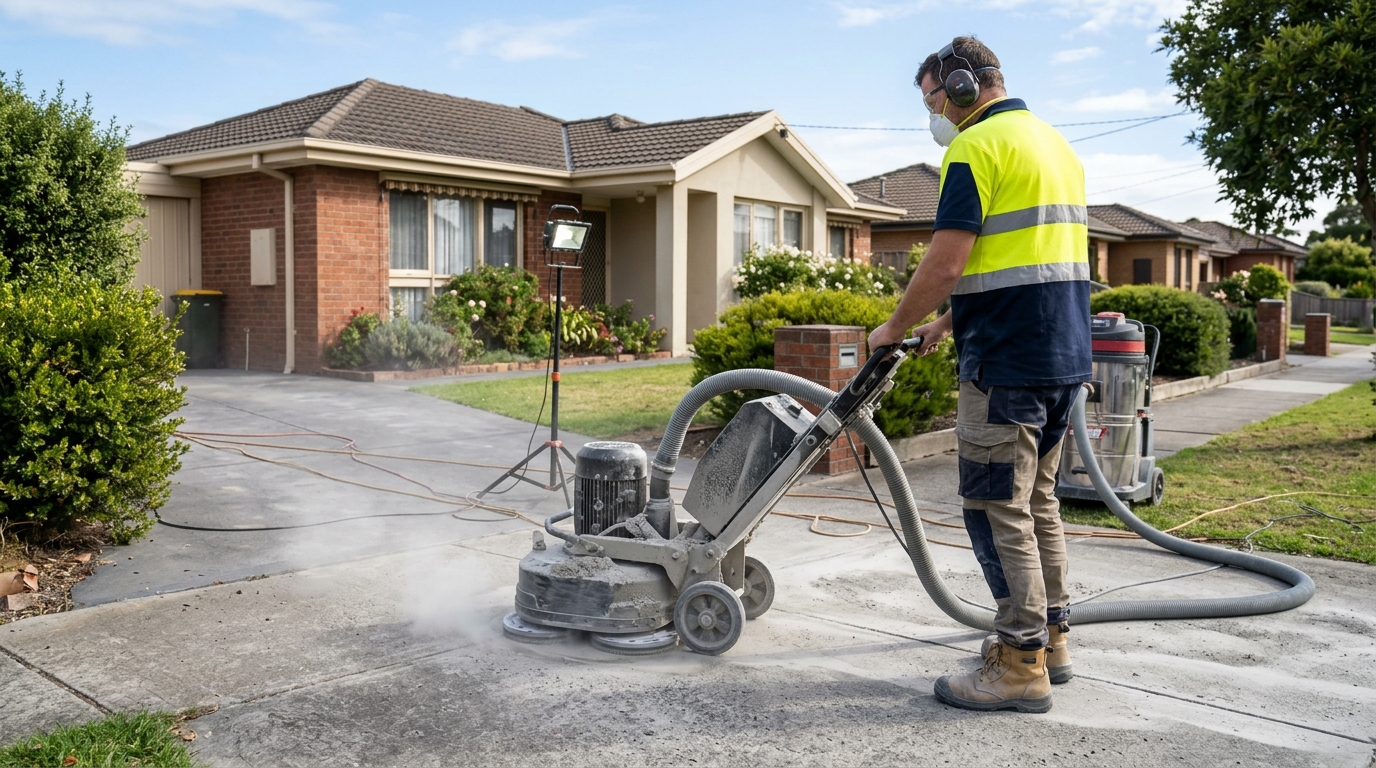
Prepare the slab. We check for cracks, patch damage and clean the surface.
Coarse grind. Heavy diamond tooling removes the top layer and opens up the stone.
Refine the grind. Finer grits smooth the surface and remove the scratch lines from the first pass.
Stop at the honed stage. The polishing process halts here, before it reaches a high shine.
Apply a penetrating sealer. The sealer soaks into the concrete to protect it from moisture and stains.
Mechanically polished concrete goes through the same early steps but continues to much finer grits. A good diamond grind does an amazing job of leveling small high spots, which gives you a consistent finish across the whole floor.
Choosing an Exposed Aggregate Level
The aggregate exposure in honed concrete can be customised for aesthetic purposes. The depth of the grind decides how much stone you see. There are three common levels:
Salt and pepper: a very light grind that shows fine sand and a few specks of stone. It is the softest look.
Medium exposure: more stone shows, and the surface has a lightly speckled character.
Full exposure: the grind goes deep and the stone shows clearly across the slab.
Your mix has a large effect on the result. A quarry grey blend gives a cool, neutral look, while a mix with decorative aggregate adds colour and contrast. When you can see the stone shows through evenly, the whole floor looks planned rather than patchy.
Stone exposure also depends on what was poured. In aggregate concrete, the stone is spread through the mix, so grinding deeper reveals more of it. On an existing slab, we can only work with the stone already in there, which is why we like to inspect it first.
Honed Concrete Applications for Homes and Businesses
Honed concrete offers exceptional durability and can withstand heavy foot traffic. That makes it a practical choice for busy homes and working spaces alike. Common uses include:
Patios, paths and outdoor living areas.
Outdoor entertaining areas beside a kitchen or barbecue.
Garage floors and workshops.
Shopfronts, cafes and any commercial space with steady customers.
Warehouses and industrial areas where the floor takes a beating.
Honed concrete creates a seamless transition between indoor and outdoor spaces. When the same finish runs from the lounge through the sliding doors to the alfresco, the house feels bigger. It is a popular choice for outdoor entertaining because guests can move freely between rooms.
You may also know about the exposed aggregate driveway, which is a related look. A honed driveway is ground flat, so it feels smoother underfoot than a washed or textured finish. We cover driveways and other concrete services across Melbourne, VIC.
Honed Concrete Floors and Indoor Concrete Floor Options
A honed concrete floor works well in indoor living areas because it is calm, even and easy on bare feet. The matte look hides small scuffs better than a mirror gloss does. Light does not glare off it, so a sunny room stays comfortable.
Honed concrete is easy to maintain due to its flat and seamless surface. There are no grout lines to trap dirt, and it requires minimal cleaning, usually just mopping. That makes it low maintenance for families and busy shops.
Indoor polished concrete is the other main option. It gives a higher shine and a more formal look. Some people like the gloss in a showroom or a modern kitchen. Others find it too slick, particularly near entries where wet shoes come in.
Difference Between Honed Concrete, Polished Concrete, and Exposed Aggregate
People often mix these three up, so here is a plain comparison. The difference between honed and polished concrete comes down to how far the grind goes and how much shine you want.
Honed: ground to a matte finish. The stone is visible, and there is little reflection.
Polished: ground much finer, then burnished to a gloss.
Exposed aggregate: the top layer is removed, often by washing or grinding, to show the stone. It can be left rough or honed smooth.
Honed and polished concrete share the same start, so you can often begin with a honed finish and step up to polish later if you change your mind. A grind and seal job is different. It grinds lightly, then relies on a topical coating on top to give colour or sheen. A penetrating sealer soaks in and leaves the surface natural, while a coating sits on top and can wear or peel in high traffic.
Decorative Concrete Finish and Design Choices
Decorative concrete gives you more control than most people expect. A honed finish can be tinted, saw cut into patterns or mixed with special stone to suit your design. Because the colour comes from the concrete itself, it does not flake off the way paint can.
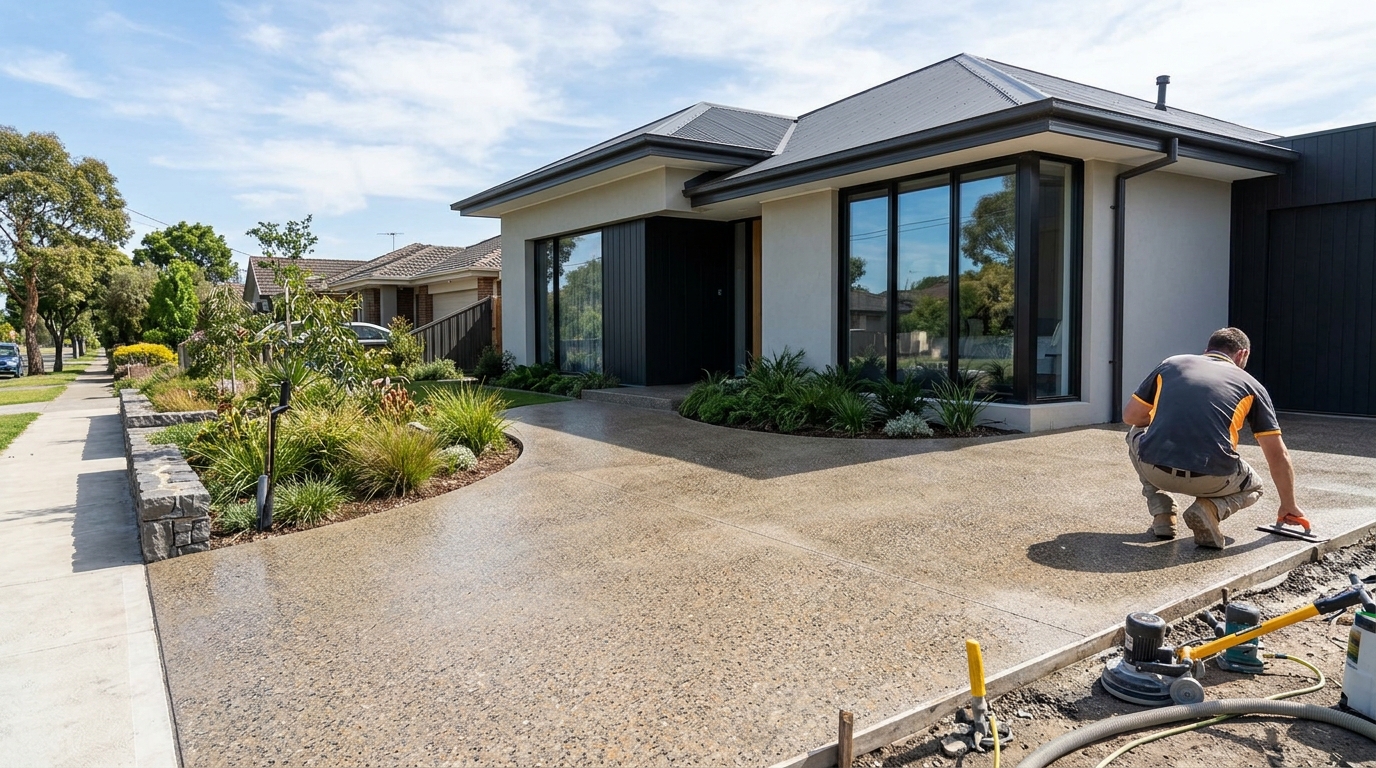
The concrete finish you pick should match the rest of the space. Compared with natural stone, honed concrete is usually more consistent in colour from one slab to the next. Compared with other materials like tiles, it has no joints to crack or stain.
A few design choices to think about:
Colour: neutral greys, warm sands or charcoal tones.
Aggregate: fine and subtle or bold and varied.
Control joints: placed to look intentional, such as along a pattern or door line.
Edges and borders: a clean saw cut or a contrasting band.
We recommend honed concrete when you want a decorative finish that still feels understated. If you like the sound of that, we can talk through samples and options.
Is Concrete Slippery When Wet?
Honed concrete is slip-resistant when sealed properly, because it has a flat matte surface rather than a glossy one. Honed concrete slippery complaints usually come from the wrong sealer or a surface that was ground too smooth. Water and environmental factors can affect the slip resistance of honed concrete. Algae, oil, leaves and standing water all change how it feels underfoot.
Polished concrete can have low slip resistance when it is wet, which is why we steer people away from gloss outdoors. Honed concrete is suitable for outdoor areas due to its safety features, and it is a sensible outdoor surface for paths, patios and steps. If you need extra grip, an anti slip treatment can be added. Asking for a slip rating from the supplier or installer is also a good idea, so you know how the finished surface should perform when wet.
Does Honed Concrete Need Sealing?
Yes. A sealer protects the surface from moisture and staining. To seal concrete after honing, we use a penetrating sealer that soaks into the pores instead of sitting on top.
Honed concrete can resist stains from spills when sealed properly. A good sealer does a fantastic job of keeping wine, oil and coffee from soaking in. Properly applied penetrating sealers also enhance weather and UV resistance, which is a real benefit in Perth's climate and in any sunny backyard.
Honed concrete requires periodic resealing to maintain protection against moisture and staining. Resealing is typically needed every 7 to 10 years, depending on traffic and exposure.
Maintaining a Honed Concrete Finish
A honed concrete finish is simple to look after. Sweep or mop regularly with a neutral cleaner and wipe up spills quickly. Avoid harsh acids, because they can etch the surface and dull the sealer.
Honed concrete is highly durable and lasts over 20 years with proper maintenance. It can be re-ground and resealed decades later, which gives the slab a fresh start without replacing it.
Is Honed Concrete Suitable for Pool Surrounds?
Yes, in most cases. Pool surrounds need grip for wet bare feet, and a matte finish does that better than a gloss. The surface also stays cooler than darker materials when sealed in a light colour, and you can add an anti slip treatment for extra safety. We would look at the layout, drainage and chemicals around your pool before settling on a sealer.
Can Existing Exposed Concrete Be Honed?
Often, yes. Existing concrete can be honed if the slab is sound and the stone is good enough to show. Cracks and old coatings need to be dealt with first, and a raw concrete slab with very little stone will give a plain look. We can check the slab and tell you honestly what to expect before any work starts.
How We Can Help
We are concreters Melbourne Pros, and we build and finish concrete across Melbourne, VIC. Our services include concrete driveways, exposed aggregate, slabs, patios and paths, repairs and resurfacing, polished concrete and grinding, cutting and removal, and retaining walls. We can look at your slab, show you the options and explain which finish suits your space.
Call us on 466 045 564 to talk about your project. We will listen, ask a few questions and give you straight answers.